Cameras Alone Can’t Do the Whole Job: What the Self-Driving Debate Proves About Loss Prevention
The self-driving industry has spent a decade testing whether cameras alone can perform a safety-critical job; the results are in, and they match what happens when a business tries to run loss prevention on camera coverage alone.
We spend our working days reading camera footage, so we have followed the argument between Tesla and Waymo with more than casual interest. One company bet that cameras alone could drive a car; the other layered cameras with sensors that measure what a camera can only estimate. That argument has now produced enough public data to settle it, and it maps directly onto a decision most multi-location businesses have already made without realizing it. By the end of this article you will be able to judge whether your own loss prevention method has the same ceiling the camera-only car does, and how to improve your setup and systems.
The Self-Driving Lesson: One Sensor Hits a Ceiling
Waymo co-CEO Dmitri Dolgov made the clearest technical case yet against camera-only autonomy, and to his credit he started with the concession: humans drive with two eyes, so cameras alone can approximate a human and power a genuinely good driver-assist product. Tesla has proven that part; its camera-only system, running without radar since 2021, is an impressive piece of engineering. Dolgov’s point is about what happens after that. Aim for a car that drives with nobody behind the wheel and, in his words, “weak sensing just leads to a safety curve that flattens out way too early.” The sensor that makes the best early demo is not the sensor stack that finishes the job.
So Waymo runs cameras, lidar, and radar together, each covering what the others cannot see: lidar measures the 3D world in pitch darkness, radar reads through fog and rain, cameras supply the color and detail. Of the 220.6 million fully driverless miles through March 2026, Waymo reports 94 percent fewer serious-injury crashes than human drivers over the same distance. The layered system did not just edge out the single sensor; it reached a level the single sensor has yet to demonstrate at all.
Your Locations Are Running the Same Experiment
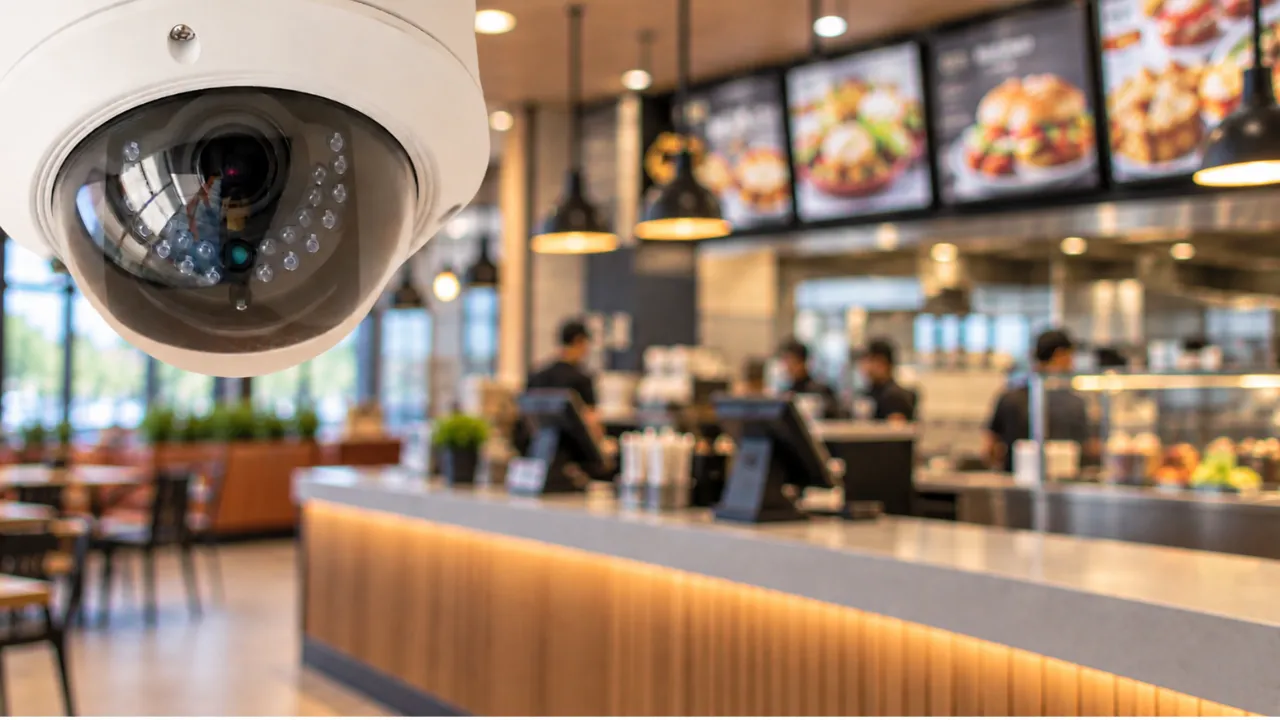
Walk into almost any restaurant, store, or gas station in America and the cameras are present and recording. Most operators stop there, on the reasonable-sounding assumption that coverage equals protection and visible cameras are a deterrent. That assumption is the camera-only bet, restated for retail, and it flattens out the same way as camera-only driverless cars do. A lens records what happens in front of it; it cannot know that the discount was unauthorized, that the refund had no sale behind it, or that the manager’s office hour coincides with the register that keeps coming up short. We covered why camera systems fail without human oversight, and the self-driving debate sharpens this point because it shows even a watched camera is still only one sensor.
The costs of stopping at coverage only are well-documented. The ACFE’s 2026 Report to the Nations puts the median occupational fraud loss at $104,000, and the typical scheme runs about a year before anyone catches it. Duration is the multiplier: schemes caught inside six months cost a median of $40,000, while those left running past five years exceed $1.1 million. This means that each month a fraud scheme occurs but the camera footage goes unread is a month it compounds.
Here is where the driverless car analogy takes an interesting turn when we apply it to loss prevention. In driving, the extra layers are expensive hardware; lidar’s price tag is the standard defense of the camera-only bet. In loss prevention, the extra layers your cameras need already exist in your business: the POS data, the transaction records, and the schedules. The layered option in a store is the human one: a trained analyst reading footage against all of your data points, and it runs at a fraction of what a single undetected scheme costs.
Expert Tools in Expert Hands: The Human in the Loss Prevention Loop
Fraud detection has always been a human game. In the ACFE’s 2026 data, 43 percent of occupational fraud was detected by tips, more than half of them from employees; people noticed something and spoke up. Software narrows where to look, and we use it daily for exactly that. Reading people is a different job: why this employee hovers at that register, why a void at 2 pm on a slow Tuesday means something different from the same void during a rush, or why a behavior that looks casual in one clip reads as deliberate in fuller context. Human behavior takes a human to read, which is why an analyst signs every finding we send.
An example from the kind of fraud prevention work we do across client locations shows the layering in practice. A camera shows an employee passing a bag through the drive-thru window; nothing about the frame looks wrong. The analyst reading that footage next to the register data sees the order was never rung in. Neither input catches it alone: the transaction record shows nothing because there is no transaction, and the lens shows a routine handoff. The finding lives between the two, and it reaches the operator with the timestamp, the evidence, and a recommended next step while the issue is days old rather than a year-long recurring fraud scheme. That is asset protection with an expert in charge of the tools: the same layering the safest cars on the road use, applied to your registers. It is also the standard we apply to technology investment in our own work.
Put Expert Eyes on the Footage You Already Have
The cameras are installed, the data is flowing, and both sit unread until someone who understands people brings them together. That is the layer we add, every day, across every location, so that years-long fraud scheme gets caught in its first week.
If you want to know what your cameras have been missing, talk to us about loss prevention monitoring. Book a 30-minute fit call and we will show you a sample finding from a business like yours.
What Operators Ask Us About Camera-Only Loss Prevention
Are cameras alone enough for loss prevention?
Cameras are necessary and they are not sufficient. A camera records events; it cannot connect what it sees to transaction data, employment context, or intent, which is where most theft shows up. The self-driving industry has demonstrated the same limit at scale: camera-only systems perform well early and plateau below the safety level that layered systems reach. In a store, the layers that close the gap are your existing data streams and trained human review of the footage against them.
What does human review catch that camera systems miss?
The gap between what happened and what it means. An unauthorized discount, a refund with no sale behind it, and an order handed out without being rung in all look routine on video. A trained analyst reading footage alongside register data catches the mismatch, understands the human behavior around it, and documents a finding an operator can act on with confidence. In the ACFE’s 2026 report, 43 percent of fraud was detected because a person noticed and spoke up; human oversight remains the working core of loss prevention.
Is expert footage review worth it compared to software alone?
Compare it to the cost of not having it. The median occupational fraud loss is $104,000, the typical scheme runs about a year before detection, and schemes that run past five years exceed $1.1 million. Expert review is designed to catch a scheme in its first days, when the loss is still small and the evidence is fresh. Our clients keep making that comparison the same way: 88 percent of them stay with us year over year.